vakantiewonng huren in Mendoza? www.airbnb.com/h/cuyoapartmza
Verwijderd
Ja leuk dat jer vanaf bent natuurlijk maar van die tering mails heb je nog steeds lastOp donderdag 27 juni 2002 16:44 schreef DJTimo het volgende:
http://www.bitdefender.com/download/download.php?file=AntiYahaa.scr wil ik graag tot link van de dag uitroepen.Ik ben hem kwijt jongens!!
Ook mijn register is weer als voorheen.
 Krijg er gvd 15 per dag ofzo
- DJTimo
- Registratie: November 2001
- Laatst online: 19-10 22:38
Cuyoapart.mza
:strip_icc():strip_exif()/u/41481/crop69e36ea57ccd1_cropped.jpg?f=community)
Dat is al flink afgenomen hoor bij mij. Krijg er nog maar 1 op de hele avondOp donderdag 27 juni 2002 22:11 schreef dajando het volgende:
[..]
Ja leuk dat jer vanaf bent natuurlijk maar van die tering mails heb je nog steeds last
vakantiewonng huren in Mendoza? www.airbnb.com/h/cuyoapartmza
Verwijderd
Bedank voor de link.Op donderdag 27 juni 2002 16:44 schreef DJTimo het volgende:
http://www.bitdefender.com/download/download.php?file=AntiYahaa.scr wil ik graag tot link van de dag uitroepen.
Ook mijn register is weer als voorheen.
Is dit proggy alles dat ik nodig hebt om van het virus af te komen? Of moet ik zelf nog wat doen?
- DJTimo
- Registratie: November 2001
- Laatst online: 19-10 22:38
Cuyoapart.mza
Die heb ik ook maar uit dit topic gehaald hoorOp vrijdag 28 juni 2002 10:56 schreef Herb1983 het volgende:
[..]
Bedank voor de link.
Is dit proggy alles dat ik nodig hebt om van het virus af te komen? Of moet ik zelf nog wat doen?
Ik heb deze *.scr gedraaid. Daarvoor en daarna mijn register gecontroleerd en alles ziet er keurig uit. Alleen dit tooltje laten scannen should do the trick
vakantiewonng huren in Mendoza? www.airbnb.com/h/cuyoapartmza
Verwijderd
Ik heb dit 13 page lange thread niet volledig gelezen, maar ik heb iets raar voor:
hij verstuurt namelijk virusmails van het yaha virus (inclusief mezelf) MAAR om een of andere gekke reden vind ik het virus totaal niet op men pc, ik heb dat progje iets hierboven laten runnen, heb allerlei virusscanners geprobeerd, niks vindt het. Enig idee wat er mis is? het is alvast niet tof dat ik cte die mails stuur zonder dat ik er zelf iets aan kan doen
Alvast bedankt!
hij verstuurt namelijk virusmails van het yaha virus (inclusief mezelf) MAAR om een of andere gekke reden vind ik het virus totaal niet op men pc, ik heb dat progje iets hierboven laten runnen, heb allerlei virusscanners geprobeerd, niks vindt het. Enig idee wat er mis is? het is alvast niet tof dat ik cte die mails stuur zonder dat ik er zelf iets aan kan doen
Alvast bedankt!
- GandalfTheGrey
- Registratie: Juli 2001
- Laatst online: 19-09 09:13
Remember, Remember..
:strip_icc():strip_exif()/u/30032/gandalf.jpg?f=community)
het enige wat ik kan verzinnen en wat ook langs is gekomen dat is dat iemand anders jouw emailadres in z'n lijst heeft en infected is en via jouw adres rondstuurd (laat me raden het is een HOTMAIL account)
Verwijderd
Ik heb dus hetzelfde alleen heb ik eerst wel het virus gehad maar door die bitdefender tool verwijderd en heb gelijk mun ie gepatched. Nu stuurt mun pop3 mail van zeelandnet nog steeds die mailtjes rond maar dan zonder virus hoe kan ik dit verhelpen??
hoe kan ik dit verhelpen??
Verwijderd
Mijn idee (zie een paar pages terug)Op woensdag 26 juni 2002 22:28 schreef GandalfTheGrey het volgende:
[..]
lees even het topic door, er moet een key worden verandert in je Registry..
kunnen we nu geen FAQ maken, want de vragen komen nu 10x voorbij


Maar ik zie dat er nu dat er een faq is, maar alleen met een verwijzing naar dit topic en naar een ander virus topic.
Kan er niet iets in te staan over hoe je het kunt herkennen, en hoe je het ken verwijderen.
Ik verwijs mensen die besmet zijn of mensen kennen die besmet zijn door naar dit topic, maar het is heel irritant om eerst nu al 13 pagina's door te lezen. De FAQ hoeft maar tijdelijk te zijn want het virus is ook tijdelijk.
Idee?
- DJTimo
- Registratie: November 2001
- Laatst online: 19-10 22:38
Cuyoapart.mza
Zie min post helemaal boven aan deze pagina.Op vrijdag 28 juni 2002 20:58 schreef GrunGe het volgende:
[..]
Mijn idee (zie een paar pages terug)
Maar ik zie dat er nu dat er een faq is, maar alleen met een verwijzing naar dit topic en naar een ander virus topic.
Kan er niet iets in te staan over hoe je het kunt herkennen, en hoe je het ken verwijderen.
Ik verwijs mensen die besmet zijn of mensen kennen die besmet zijn door naar dit topic, maar het is heel irritant om eerst nu al 13 pagina's door te lezen. De FAQ hoeft maar tijdelijk te zijn want het virus is ook tijdelijk.
Idee?
Het tooltje past OOK je registry aan

vakantiewonng huren in Mendoza? www.airbnb.com/h/cuyoapartmza
Verwijderd
bedankt voor deze vroege infoGeachte @Home abonnee,
Wij willen u graag informeren over een e-mail virus dat op dit moment veel problemen veroorzaakt bij verschillende Service Providers in Nederland.
Het gaat om het W32.Klez-virus, dan wel het W32.Yaha.f-virus. Wij verzoeken u vriendelijk om uw systeem te controleren op de mogelijke aanwezigheid van virussen. U kunt hiervoor het beste eerst een update van uw virusscanner maken.
Indien onze mailservers een e-mail vanaf uw @Home e-mailadres ontvangt dat het virus bevat dan zullen wij automatisch uw e-mail account blokkeren en kunt u geen e-mails meer verzenden. Deze maatregel wordt getroffen om verdere verspreiding van dit virus te voorkomen. Nadat uw computer is 'schoongemaakt' kunt u ons daarvan op de hoogte stellen via http://start.home.nl/abonnee/mailaccount. Wanneer u de instructies daar volgt, zullen wij ervoor zorgen dat u binnen 1 werkdag weer normaal gebruik kunt maken van uw emailadres.
Wij vragen uw begrip voor onze voorzorgsmaatregelen.
Met vriendelijke groet,
@Home
Afdeling Klantenservice
_____________________________________________
Meer informatie over virussen kunt u vinden op onze online Help pagina's <http://help.home.nl>. Zoekterm "virus".
Ook kunt u op onderstaande pagina's terecht voor meer informatie.
Link voor het W32.Klez-virus:
<http://www.symantec.com/avcenter/venc/data/w32.klez.gen@mm.html>
<http://vil.mcafee.com/dispVirus.asp?virus_k=99455>
Link voor het Yaha.f-virus:
<http://securityresponse.symantec.com/avcenter/venc/data/w32.yaha.f@mm.html>
<http://vil.mcafee.com/dispVirus.asp?virus_k=99528>
Let wel: @Home is niet verantwoordelijk voor de inhoud van deze sites en biedt geen verdere ondersteuning bij het verwijderen van virussen.
maar toch leuk dat ze het ff zeggen
- Tutti-frutti
- Registratie: Oktober 2001
- Niet online
Graag gedaan!
:strip_exif()/u/38590/ugo_usa.gif?f=community)
kheb hier een goede oplossing voor het virus, en is simpel, als je nog geen virusscanner geinstalled hebt, en dus niet meer kan, omdat het een execute is.
wat moet je doen?
1 sluit al de applicaties
2 open nu het bestand yahatool.com. Een dos venster opent zich en je moet dan volgens mij 1 x op een toets drukken, of hij gaat al door, dat kan ook. in ieder geval kan het redelijk lang duren omdat dit bestand alle bestanden na gaat op de virus en alles oplost en de virus verwijderd.
3 nadat het programma beeindigd is moet je windows opnieuw opstarten
4 open nu het registratiebestand "yaha_fix.reg". hij vraagt dan of hij dit wilt toevoegen aan het register, zeg ja/ok
5 start opnieuw op en je computer is weer van het yaha virus vrij.
wat moet je doen?
1 sluit al de applicaties
2 open nu het bestand yahatool.com. Een dos venster opent zich en je moet dan volgens mij 1 x op een toets drukken, of hij gaat al door, dat kan ook. in ieder geval kan het redelijk lang duren omdat dit bestand alle bestanden na gaat op de virus en alles oplost en de virus verwijderd.
3 nadat het programma beeindigd is moet je windows opnieuw opstarten
4 open nu het registratiebestand "yaha_fix.reg". hij vraagt dan of hij dit wilt toevoegen aan het register, zeg ja/ok
5 start opnieuw op en je computer is weer van het yaha virus vrij.
- We Are Borg
- Registratie: April 2000
- Laatst online: 21:48
Moderator Wonen & Mobiliteit / General Chat
/u/5360/crop65d3c045ca48f_cropped.png?f=community)
Inderdaad afgenomen. van ongeveer 10 a 15 per dag naar 2 a 3 per dagOp donderdag 27 juni 2002 23:43 schreef DJTimo het volgende:
[..]
Dat is al flink afgenomen hoor bij mij. Krijg er nog maar 1 op de hele avond
. Toch blijft het velvelend...Hi, bla bla, see attachement 
Verwijderd
Irritante kutzooi, ik heel verstandig niets openen  doet mn zusje het, dus via netwerk hoppa ook bij mij
doet mn zusje het, dus via netwerk hoppa ook bij mij
Verwijderd
Blocken kan niet met IMAP en weer wint de aanhouder gvd imap zou POP 0wnen als alle providers niet zo zuinig deden en MS zich ook eens voor andere standaards interesseerde..
en weer wint de aanhouder gvd imap zou POP 0wnen als alle providers niet zo zuinig deden en MS zich ook eens voor andere standaards interesseerde..
Verwijderd
Grmbl , als ik op die bitdefender-link klik, krijg ik een scherm met gebrabbel ipv dat de downloadmanager opent van Mozilla.
Windoos only zeker
Windoos only zeker
- alt-92
- Registratie: Maart 2000
- Niet online
ye olde farte
:strip_icc():strip_exif()/u/4167/bacall8.jpg?f=community)
dan gebruik je toch "save link as" ?
Wel op Windows afgeven maar nog steeds dom klikgedrag vertonen
Wel op Windows afgeven maar nog steeds dom klikgedrag vertonen
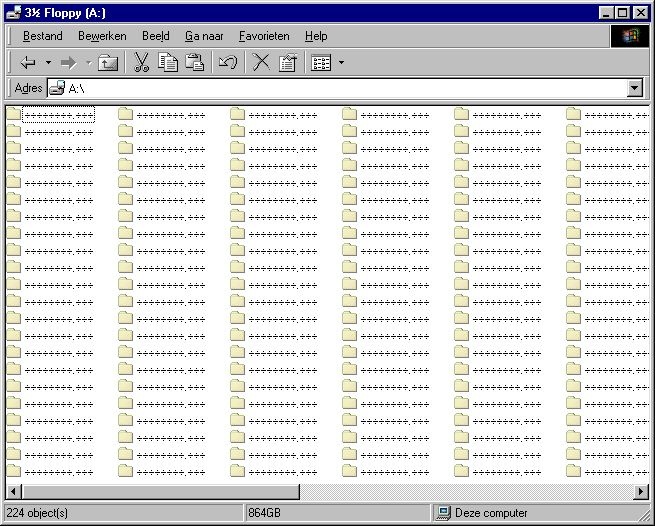
ik heb een 864 GB floppydrive! - certified prutser - the social skills of a thermonuclear device
Verwijderd
Werkt ook niet.
Dan wil hij "download.php.html" opslaan.
En op de site zelf krijg ik hetzelfde.
Dan wil hij "download.php.html" opslaan.
En op de site zelf krijg ik hetzelfde.
/u/21638/crop626ad1243c0f9_cropped.png?f=community)
Hij is niet zo groot, neem contact met me op en ik mail 'm wel ff. Hij is 95.5 kbOp dinsdag 02 juli 2002 01:22 schreef Toranaga het volgende:
Werkt ook niet.
Dan wil hij "download.php.html" opslaan.
En op de site zelf krijg ik hetzelfde.
ICQ staat in m'n profiel, MSN is gewoon m'n mail adres in m'n profiel.
9000Wp o/w SolarEdge SE6K - Panasonic 5kW bi-bloc - gasloos sinds 17-7-2023
- alt-92
- Registratie: Maart 2000
- Niet online
ye olde farte
OwkeeOp dinsdag 02 juli 2002 01:22 schreef Toranaga het volgende:
Werkt ook niet.
 mijn opmerking over klikken neem ik terug.
Denk dat je browser niet goed de mime-types doorkrijgt van die server dan.
ik heb een 864 GB floppydrive! - certified prutser - the social skills of a thermonuclear device
Nah, duurt 'n beetje lang, ik host 'm zelf wel ffOp dinsdag 02 juli 2002 01:27 schreef blackd het volgende:
[..]
Hij is niet zo groot, neem contact met me op en ik mail 'm wel ff. Hij is 95.5 kb
ICQ staat in m'n profiel, MSN is gewoon m'n mail adres in m'n profiel.
Morgen of overmorgen is ie weg.
[weg]
Nu al weg, ja nu al weg, anders wordt XS4ALL boos
9000Wp o/w SolarEdge SE6K - Panasonic 5kW bi-bloc - gasloos sinds 17-7-2023
Verwijderd
Bedankt voor het aanbod maar ik heb ff IE aangeslingerd en daarmee gehaald. Anders roest ie toch maar weg.Op dinsdag 02 juli 2002 01:27 schreef blackd het volgende:
Hij is niet zo groot, neem contact met me op en ik mail 'm wel ff. Hij is 95.5 kb
ICQ staat in m'n profiel, MSN is gewoon m'n mail adres in m'n profiel.
superjoost in dit topic heeft hetzelfde zie ik net.
Ik heb degene kunnen vinden die me aan het bestoken was met yahamails. Is zijn register ook gefixed als ik die scr run ?
Nou, voor hem geldt hetzelfde aanbod, als ie dit nog leestOp dinsdag 02 juli 2002 02:04 schreef Toranaga het volgende:
Bedankt voor het aanbod maar ik heb ff IE aangeslingerd en daarmee gehaald. Anders roest ie toch maar weg.
superjoost in dit topic heeft hetzelfde zie ik net.
Dacht het wel, anders ff tools van Tutti-frutti runnen (die .reg) dat zou ook moeten werken.Ik heb degene kunnen vinden die me aan het bestoken was met yahamails. Is zijn register ook gefixed als ik die scr run ?
9000Wp o/w SolarEdge SE6K - Panasonic 5kW bi-bloc - gasloos sinds 17-7-2023
- Mad_Cow
- Registratie: Februari 2002
- Laatst online: 02-09 11:23
:strip_icc():strip_exif()/u/48200/DS-icon.jpg?f=community)
Kennen jullie een virus met via emial verspreid met als subject goldfish?
Ik krijg m steeds, heb onderhand een vir.scanner geinstalleerd, maar krijg nog steeds de melding dat die dingen versturrd worden
(bijvoorbeeld door 'undelivered' messages)
Wat kan ik hier tegen doen?
Ik krijg m steeds, heb onderhand een vir.scanner geinstalleerd, maar krijg nog steeds de melding dat die dingen versturrd worden
(bijvoorbeeld door 'undelivered' messages)
Wat kan ik hier tegen doen?
Ligt eraan welke versie van de updatebestanden je hebt.Op dinsdag 02 juli 2002 02:35 schreef Mad_Cow het volgende:
Oops k zie nu dus dat dat ook dat yaha virus is. Maar nog steeds, Norton zegt dat ik niks heb. Heb ik dan ook echt niks? Ik ben er nog niet zeker van
Ik zou toch die tool AntiYahaa.scr ff runnen
(voor de zekerheid)Als je zulke undeliverable messages krijgt, wil dat overigens niet zeggen dat je 't virus zelf hebt. 't kan ook zijn van iemand die 't virus heeft, en jou in z'n MSN lijst heeft staan.
9000Wp o/w SolarEdge SE6K - Panasonic 5kW bi-bloc - gasloos sinds 17-7-2023
- Mad_Cow
- Registratie: Februari 2002
- Laatst online: 02-09 11:23
Maar er staat van you tried to send this mail (of zoiets), kan het dan nog steeds dat ik m niet heb?
- rtgo
- Registratie: September 2001
- Laatst online: 30-05-2025
Lemmus Lemmus
:strip_icc():strip_exif()/u/36276/pocky.jpg?f=community)
Ik heb nog geen enkele keer dit virus ontvangen. Voor de uitzondering ben ik blij dat ik geen vrienden heb
- JedaiNait
- Registratie: Mei 2002
- Niet online
Uiteraard!
:strip_exif()/u/56292/fok_alien_ani.gif?f=community)
Ik heb iets vaags met dit virus. Ik heb geen een keer de atachment van een 'goldfish' mailtje geopend (ook niet van vergelijkbare mailtjes). Bovendien zegt dat tooltje dat ik het virus niet heb.
Toch schijn ik het mailtje verstuurd te hebben naar een buurmeisje, waar ik het e-mailadres niet eens van heb!
Hoe komt dit?
Toch schijn ik het mailtje verstuurd te hebben naar een buurmeisje, waar ik het e-mailadres niet eens van heb!
Hoe komt dit?
Elvis is dood, Mozart is dood, Einstein is dood en ik voel me ook niet zo lekker...
- rtgo
- Registratie: September 2001
- Laatst online: 30-05-2025
Lemmus Lemmus
Misschien heeft iemand anders het adres van jullie beide. En heeft je buurmeisje een vervalst bericht gekregen.Op dinsdag 02 juli 2002 13:51 schreef JedaiNait het volgende:
Ik heb iets vaags met dit virus. Ik heb geen een keer de atachment van een 'goldfish' mailtje geopend (ook niet van vergelijkbare mailtjes). Bovendien zegt dat tooltje dat ik het virus niet heb.
Toch schijn ik het mailtje verstuurd te hebben naar een buurmeisje, waar ik het e-mailadres niet eens van heb!
Hoe komt dit?
Verwijderd
Dit heb ik ook precies hetzelfde, geen enkele virusscanner vind iets maar toch komt er iemand naar me toe over MSN die zo'n FWD yaha virus met sscreensaver heeft gehadOp dinsdag 02 juli 2002 13:51 schreef JedaiNait het volgende:
Ik heb iets vaags met dit virus. Ik heb geen een keer de atachment van een 'goldfish' mailtje geopend (ook niet van vergelijkbare mailtjes). Bovendien zegt dat tooltje dat ik het virus niet heb.
Toch schijn ik het mailtje verstuurd te hebben naar een buurmeisje, waar ik het e-mailadres niet eens van heb!
Hoe komt dit?

Ook krijg ik vaak email notice van Undelivered Mail...
- Pubbert
- Registratie: Juni 2002
- Laatst online: 18-10 09:00
random gestoord
:strip_icc():strip_exif()/u/57026/drag0nico.jpg?f=community)
laat maar..
╔╗╔═╦╗
║╚╣║║╚╗
╚═╩═╩═╝
Onder andere: http://gathering.tweakers.net/forum/list_message/14274183#14274183Op dinsdag 02 juli 2002 16:00 schreef Gwain het volgende:
ik heb panda anti-virus.. hoe kan ik het w32.yaha.f@mm het beste verwijderen? Sorry als het ergens in dit topic staat maar het is al zo'n groot topic dus zoeken is lastig
en in de eerste paar posts staan links naar bitdefender, daar is een removal tool te halen.
9000Wp o/w SolarEdge SE6K - Panasonic 5kW bi-bloc - gasloos sinds 17-7-2023
- Max|Burn
- Registratie: Augustus 2001
- Laatst online: 22-09 11:51
-- .. ... .--- .- .-.-.-
/u/31831/crop55d04481a9771.png?f=community)
kleine hint, die undeliverable berichten IS het virus...Op dinsdag 02 juli 2002 10:43 schreef Mad_Cow het volgende:
Maar er staat van you tried to send this mail (of zoiets), kan het dan nog steeds dat ik m niet heb?
150 verschijningsvormen..remember..
Verwijderd
IK HEB alleen bij HOTMAIL emailtjes die ik krijg vooraal van MAIL RETURNED DELIVERY ofzoiets.. maar voor de rest bij outlook niet enzo.. heb ik da virus dan oook/?
alvast bedankt
freak
EN HOE VERWIJDER JE DIT VIRUS ik HEB al gescand met die .scr file.. van free_tools ofzoiets.. maar geeeft 0 aan.. maar BLIJF maar emails kirjgen!!
alvast bedankt
freak
EN HOE VERWIJDER JE DIT VIRUS ik HEB al gescand met die .scr file.. van free_tools ofzoiets.. maar geeeft 0 aan.. maar BLIJF maar emails kirjgen!!
Verwijderd
Niets van aantrekken.Op dinsdag 02 juli 2002 20:51 schreef fantasyfreak het volgende:
IK HEB alleen bij HOTMAIL emailtjes die ik krijg vooraal van MAIL RETURNED DELIVERY ofzoiets.. maar voor de rest bij outlook niet enzo.. heb ik da virus dan oook/?
Dat stond ook in de mailtjes waarmee ik bestookt word/werd.
GRRR, heb ik de ene gevonden, begint iemand anders weer.
Verwijderd
jah maar heb ik dan WEL of NIET een virus?
alvast bedankt.. kan ik tenminste met een gerust hart pittuhh..
alvast bedankt.. kan ik tenminste met een gerust hart pittuhh..
Verwijderd
elke dag vind ik wel 1 of 2 geinfecteerde mailtjes in mijn inbox. meestal over friendships etc.
maar gister ontving ik opeens een mail ook geinfecteerd met w32.yaha.f@mm maar dat had als subject "informatie hoofdstuk 12" oftewel bedoeld als een soort uittreksel van een of ander hoofdstuk uit een leerboek.
[edit/]
wat mij opvalt is dat voornamelijk de mailtjes binnen komen op mijn hotmailadres. dus ook undelivered mails.
zou die hotmailserver besmet zijn
[edit/]
maar gister ontving ik opeens een mail ook geinfecteerd met w32.yaha.f@mm maar dat had als subject "informatie hoofdstuk 12" oftewel bedoeld als een soort uittreksel van een of ander hoofdstuk uit een leerboek.
[edit/]
wat mij opvalt is dat voornamelijk de mailtjes binnen komen op mijn hotmailadres. dus ook undelivered mails.
zou die hotmailserver besmet zijn
[edit/]
Verwijderd
Is het noodzakelijk om de waarden van het register "%1" %* in te vullen of kan het ook zonder die waarden ???
- Norckon
- Registratie: September 2000
- Laatst online: 02-09 16:05
:strip_icc():strip_exif()/u/12241/Pupke-small.jpg?f=community)
idd.. ik krijg ze ALLEEN maar via hotmail, terwijl de mensen van wie ze komen echt wel mijn andere adressen in hun adresboek hebben staan. zou dit virus selectief zijn?Op dinsdag 02 juli 2002 22:55 schreef Freak_66 het volgende:
wat mij opvalt is dat voornamelijk de mailtjes binnen komen op mijn hotmailadres. dus ook undelivered mails.
zou die hotmailserver besmet zijn
- TheKeeper
- Registratie: Juni 2001
- Laatst online: 25-08-2025
In 2 words: NO!
:strip_icc():strip_exif()/u/27355/Image2.jpg?f=community)
Heeft gezocht op die 2 bestandsnamen (Msscra.exe en die andere) in de /recycled/ en niets gevonden. Nu lopen die 2 tools van BitDefender en is NAV2002 (met laatste update op 26 juni) druk bezig, maar vinden ze niets. Toch weet ik zeker dat ik een screensaver gedownload heb en proberen uit te voeren (dom dom dom). Heb ik dan gewoon geluk of hoe zit dat?
En ik heb 2 hotmail adressen, maar ik krijg de mailtjes alleen binnen op het adres wat ik niet via Outlook Express bekijk. Rara, hoe kan dit.
En ik heb 2 hotmail adressen, maar ik krijg de mailtjes alleen binnen op het adres wat ik niet via Outlook Express bekijk. Rara, hoe kan dit.
- GandalfTheGrey
- Registratie: Juli 2001
- Laatst online: 19-09 09:13
Remember, Remember..
that's called NAV2002 AUto-Protect..
Verwijderd
Hmmmmm een nieuwe verontrusting over het Yaha.g virus.(volgens Hotmail scan)
ik kreeg net een mailtje toegestuurd met alle persoonlijke informatie van iemand met als subject c.v.
De informatie klopt ook echt. Ik weet dat hij me deze info niet zou sturen want ik ken al zijn gegevens al en er is niets veranderd.
het mailtje zag er zo uit (xxx = prive info):
Persoonlijke gegevens Naam xxx Voornaam xxx Adres xxx Postcode xxxx xx Woonplaats
Zijn woonplaats stond er echter niet bij. Het is gestuurd via en chello mailaccount.
(het virus zat in een attachment : c.v..jpg.scr (39k) )
Kan het zo zijn dat bv. met zo'n .NET pasport je info wordt opgeslagen op je pc en het virus deze gegevens door stuurt?
ik kreeg net een mailtje toegestuurd met alle persoonlijke informatie van iemand met als subject c.v.
De informatie klopt ook echt. Ik weet dat hij me deze info niet zou sturen want ik ken al zijn gegevens al en er is niets veranderd.
het mailtje zag er zo uit (xxx = prive info):
Persoonlijke gegevens Naam xxx Voornaam xxx Adres xxx Postcode xxxx xx Woonplaats
Zijn woonplaats stond er echter niet bij. Het is gestuurd via en chello mailaccount.
(het virus zat in een attachment : c.v..jpg.scr (39k) )
Kan het zo zijn dat bv. met zo'n .NET pasport je info wordt opgeslagen op je pc en het virus deze gegevens door stuurt?
Verwijderd
In sommige mails die ik kreeg van iemand stond een stukje uit een doc met bank gegevens , is ook nie prettig voor die persoon.
Verwijderd
Uh... Ik krijg ook stapels van die dingen Maar soms krijg ik ook zo'n blahblah mailserver Exim mailtje waar als adres dat van mij staat... Ik weet zeker dat niemand op deze bak dat ding ooit heeft geopend dus eh hoe kan dat? Is dat wel vaker? Ook die regkey staat bij mij nog goed... Ik weet het niet meer hoor Iemand anders wel?
Maar soms krijg ik ook zo'n blahblah mailserver Exim mailtje waar als adres dat van mij staat... Ik weet zeker dat niemand op deze bak dat ding ooit heeft geopend dus eh hoe kan dat? Is dat wel vaker? Ook die regkey staat bij mij nog goed... Ik weet het niet meer hoor Iemand anders wel?
- DeTjuk
- Registratie: December 2000
- Laatst online: 21:57
Hetzelfde hier....
Krijg te horen van vrienden dat ik (alleen via mijn hotmail adres) dat virus ook verstuur...
Nooit die attachment geopend...
En alleen de mail bekeken via hotmail zelf dus niet naar eigen pc gehaald...
Ik denk, zoals eerder genoemd in dit topic, dat het virus jouw mailadres pakt omdat dat bij iemand anders, die wel besmet is, in zijn adresseboek staat...
Ook mijn registry key staat nog zoals het hoort...
Nog even een NL link over het virus: http://www.virusalert.nl/?show=virus&id=289&PHPSESSID=9b7184b23affeec2de4b2a42b481b1b1
Krijg te horen van vrienden dat ik (alleen via mijn hotmail adres) dat virus ook verstuur...
Nooit die attachment geopend...
En alleen de mail bekeken via hotmail zelf dus niet naar eigen pc gehaald...
Ik denk, zoals eerder genoemd in dit topic, dat het virus jouw mailadres pakt omdat dat bij iemand anders, die wel besmet is, in zijn adresseboek staat...
Ook mijn registry key staat nog zoals het hoort...
Nog even een NL link over het virus: http://www.virusalert.nl/?show=virus&id=289&PHPSESSID=9b7184b23affeec2de4b2a42b481b1b1
[PSN: DeTjuK] Follow your instinct, no one beats you with character and balls.
- Kwartjuh
- Registratie: Mei 2002
- Laatst online: 20-10 22:43
:strip_icc():strip_exif()/u/54714/up_dog_klein.jpg?f=community)
Ik heb in de afgelopen dagen maar in keer zon virus in mijn mailbox gekregen.
Ik verspeid mij mailadres gewoon niet massaal.
Ik heb ook niemand in mij adresboek staan.
dus...
Ik verspeid mij mailadres gewoon niet massaal.
Ik heb ook niemand in mij adresboek staan.
dus...
-[ Het Kwartjuh Valt... ]-
:strip_icc():strip_exif()/u/40555/Irrelevant.jpg?f=community)
Wie zoekt, zal vinden http://www.google.com
- DeTjuk
- Registratie: December 2000
- Laatst online: 21:57
Tja, maar niet iedereen is zoals jij he...Op woensdag 03 juli 2002 21:15 schreef Kwartjuh het volgende:
Ik heb in de afgelopen dagen maar in keer zon virus in mijn mailbox gekregen.
Ik verspeid mij mailadres gewoon niet massaal.
Ik heb ook niemand in mij adresboek staan.
dus...
Kijk als dat wel zo was dan is de verspreiding van virussen een stuk minder...
Het kan een tip zijn voor mensen, maar ja, mensen zijn lui en wat is er nou handiger als een adresboek dat automatisch het mail adres voor je invult...
Trouwens waarom gebruiken er niet meer mensen www.eudora.com Is zeker minder virusgevoelig ivg met Outlook.
Eudora werkt prima en is gratis (beetje reklame in programma zelf, maar niet hinderlijk).
En iedereen zou direct openen van berichten als het geselecteerd wordt (of hoe dat ook maar heet) moeten uitzetten....... maar ja....
[PSN: DeTjuK] Follow your instinct, no one beats you with character and balls.
Verwijderd
MISSSSSCHIEN is het de HOOGSTE TIJD
dat iemand dit giga-topic inkort en alleen de hoognodige info in een meteen-closed-topic neerzet?
dus die link naar bitdefender en wat info erbij?
is maar een idee
bij mij overigens ook geen virus maar mijn hotmail stuurt en stuurt en ondertussen ontvang ik via outlook ook...  whoever wrote this one sure knows his
  ... kill em all, i say
is het de HOOGSTE TIJDdat iemand dit giga-topic inkort en alleen de hoognodige info in een meteen-closed-topic neerzet?
dus die link naar bitdefender en wat info erbij?
is maar een idee
bij mij overigens ook geen virus maar mijn hotmail stuurt en stuurt
en ondertussen ontvang ik via outlook ook... whoever wrote this one sure knows his ... kill em all, i say
Verwijderd
Nu dit topic half te hebben gelezen moet ik het ook eff kwijt:
Wat een #$# virus, krijg het sinds vorige week en krijg telkens rond de 40 emails met attachment per dag van verschillende personen, en vandaag zelfs een record van al 78 Gaat dus niet leuk worden als ik op vakantie ben en ik niet een keer naar een internetcafe mijn mailbox kan bijhouden met verwijderen van deze rotzooi
Wat een #$# virus, krijg het sinds vorige week en krijg telkens rond de 40 emails met attachment per dag van verschillende personen, en vandaag zelfs een record van al 78
Gaat dus niet leuk worden als ik op vakantie ben en ik niet een keer naar een internetcafe mijn mailbox kan bijhouden met verwijderen van deze rotzooi
Verwijderd
Krijg jij ze nu nog?Op zaterdag 06 juli 2002 16:45 schreef Emp-Hasis het volgende:
Nu dit topic half te hebben gelezen moet ik het ook eff kwijt:
Wat een #$# virus, krijg het sinds vorige week en krijg telkens rond de 40 emails met attachment per dag van verschillende personen, en vandaag zelfs een record van al 78
Ik heb ze een paar dagen achter elkaar gehad maar nu krijg ik er hooguit nog maar 1 in de 2 dagen.
- Macadoshis
- Registratie: Juli 2002
- Laatst online: 16-08-2025
Feyenoord 4 ever
:strip_icc():strip_exif()/u/59661/001.jpg?f=community)
Ik krijg die klote mailtje snog steeds met dat Yahaa virus...
Ik word er echt gek van!! Iemand die mijn adres heeft weet niet dat hij/zij dat virus heeft.....
Yahaa zwemt jammer genoeg nog steeds rond
Ik word er echt gek van!! Iemand die mijn adres heeft weet niet dat hij/zij dat virus heeft.....
Yahaa zwemt jammer genoeg nog steeds rond
Mopreme - lvl 80 Warrior @ Hellscream (Symbiosis)
- Macadoshis
- Registratie: Juli 2002
- Laatst online: 16-08-2025
Feyenoord 4 ever
Ik ben oon virus vrij want Nav 2002 herkent yahaa
Op zaterdag 06 juli 2002 20:12 schreef gewoonabje het volgende:
ik ben lekker virusvrij... gelukkig .... de vorige keer koste me dat een hd
Mopreme - lvl 80 Warrior @ Hellscream (Symbiosis)
Verwijderd
Ik ben altijd virus vrij
normaal is centralcommand de eerste om een nieuwe virus te vinden..
Vexira blows the sox off of Norton...
een goede virus scanner zonder al die Norton toeten en bellen....
normaal is centralcommand de eerste om een nieuwe virus te vinden..
Vexira blows the sox off of Norton...
een goede virus scanner zonder al die Norton toeten en bellen....
- marsian
- Registratie: November 2000
- Laatst online: 20-10 19:49
:strip_icc():strip_exif()/u/15029/kraal.jpg?f=community)
Ik ook, ik wordt er gek van! krijg er 15 per dag op me hotmail binnen!Op zaterdag 06 juli 2002 19:13 schreef Macadoshis het volgende:
Ik krijg die klote mailtje snog steeds met dat Yahaa virus...
Ik word er echt gek van!! Iemand die mijn adres heeft weet niet dat hij/zij dat virus heeft.....
Yahaa zwemt jammer genoeg nog steeds rond
Verwijderd
Mm, vandaag heb ik er maar 3 gehad.. Vaaaag dus.Op zaterdag 06 juli 2002 17:25 schreef Emphelator het volgende:
[..]
Krijg jij ze nu nog?
Ik heb ze een paar dagen achter elkaar gehad maar nu krijg ik er hooguit nog maar 1 in de 2 dagen.
- dawuss
- Registratie: Maart 2001
- Laatst online: 01-02 20:46
gadgeteer
/u/24089/evilbonzi-eye-dawuss-v2.png?f=community)
Ik kom eigenlijk niet vaker dan nodig in mijn hotmail inbox, maar vandaag bleek m'n bulkmail vol te zitten met goldfish mailtjes. Het vreemde was dat er ook een boel bij waren op naam van de mailer-daemon bij hotmail. Doet het virus dit expres, of exploit hij een zwakte in hotmail?
micheljansen.org
Fulltime Verslaafde Commandline Fetisjist ©
Btw ik weet niet of dit helpt voor hotmail maar als je naar options gaat en dan naar personal info heb je daar 3 balkjes "share my e-mail adres" etc.Maybe dat die optie wel voorkomt van spammail ofzo 
- Serial-X
- Registratie: Januari 2002
- Laatst online: 21:00
/u/45860/test2.png?f=community)
Hopla! Norman vind hier vanalles... Ik heb blijkbaar het Win32/NimdaA@mm en Win32/NimdaE@mm virus.. hmm.. wat zou er toch gebeuren met de mensen aan wie ik dit virus te danken heb tegenkom op straat? Vast & Zeker wordt er (niet) vriendelijk gepraat... (en andere dingen...)
LOL JK THAT'S WHAT RIVERS ARE FOR
- Serial-X
- Registratie: Januari 2002
- Laatst online: 21:00
Alle hotmail users: Zet het "ongewenste post" niveau op Hoog of Extreem! Zo krijg je niet elke dag 7859330492 keer te zien dat je een nieuwe mail hebt...
Edit:
Ik krijg zelf mails van wie ik niet eens weet wie het is!?
En weet iemand hoe je het Nimda.E@mm virus kunt verwijderen? M'n Norman kan dat niet
Edit:
Ik krijg zelf mails van wie ik niet eens weet wie het is!?
En weet iemand hoe je het Nimda.E@mm virus kunt verwijderen? M'n Norman kan dat niet
LOL JK THAT'S WHAT RIVERS ARE FOR
- Pubbert
- Registratie: Juni 2002
- Laatst online: 18-10 09:00
random gestoord
Of gewoon bij geen enkel progje of site je email invullen, dan krijg je ze ook niet! (zoals ik)Op maandag 15 juli 2002 12:27 schreef Serial-X het volgende:
Alle hotmail users: Zet het "ongewenste post" niveau op Hoog of Extreem! Zo krijg je niet elke dag 7859330492 keer te zien dat je een nieuwe mail hebt...
Edit:
Ik krijg zelf mails van wie ik niet eens weet wie het is!?
En weet iemand hoe je het Nimda.E@mm virus kunt verwijderen? M'n Norman kan dat niet
en wat wou je doen als je de mail sender op straat tegenkomt? met je 12jaar of je kunt ook gewoon als je die mails krijgt nix openen. Dan is de kans ook kleiner dat je een virus krijgt.
en je kunt het beste de YAHA remover proberen. url weet ik niet, staat ergens in dit topic
╔╗╔═╦╗
║╚╣║║╚╗
╚═╩═╩═╝
Verwijderd
Ik krijg nu steeds e-mails binnen met de W32/Yaha.g@mm virus. Krijg soms wel 100 per dag Nu heb ik met verschillende virus scanners en programma's gescaned. Maar kan niet een virus vinden.
Maar ik kreeg wel van iemand een email die zei dat ik hem een e-mail stuurde met die W32/Yaha.g@mm virus
Heb ik nou een virus? Vreede is tevens ook dat ik 2 hotmail accounts heb, en alleen met 1 al die virussen binnen krijg...
Nu heb ik met verschillende virus scanners en programma's gescaned. Maar kan niet een virus vinden.Maar ik kreeg wel van iemand een email die zei dat ik hem een e-mail stuurde met die W32/Yaha.g@mm virus
Heb ik nou een virus? Vreede is tevens ook dat ik 2 hotmail accounts heb, en alleen met 1 al die virussen binnen krijg...
Nee, iemand anders kan ook onder jouw mailadres een mailtje met het virus sturen. Zo kun je ook mailtjes versturen die van billgates@microsoft.com ofzo komenOp dinsdag 16 juli 2002 16:31 schreef thekillerbean het volgende:
Ik krijg nu steeds e-mails binnen met de W32/Yaha.g@mm virus. Krijg soms wel 100 per dag
Maar ik kreeg wel van iemand een email die zei dat ik hem een e-mail stuurde met die W32/Yaha.g@mm virus
Heb ik nou een virus? Vreede is tevens ook dat ik 2 hotmail accounts heb, en alleen met 1 al die virussen binnen krijg...
Verwijderd
Ik heb een vraag over Yaha-E. Deze had ik ook erop staan, maar ik had geen verkeerd beeldscherm of iets dergelijks als foute teksten op het scherm. Weet dus niet of virus iets aangepast had. Nou heb ik eerst via [url="http://vil.mcafee.com/dispVirus.asp?virus_k=99528"]http://vil.mcafee.com/dispVirus.asp?virus_k=99528[/url] en daaronder die pagina die UNDO.REG file gedownload en uitgevoerd (om registry weer goed te krijgen). Vervolgens dat virus verwijderd en opnieuw opgestart. Nu geeft antivirus geen virus meer aan. Kan ik controleren of die registry daadwerkelijk weer goed staat? Als die niet goed staat, wat zou er dan fout gaan op de computer Heb ik voldoende gedaan
Heb ik voldoende gedaan
- _-= Erikje =-_
- Registratie: Maart 2000
- Laatst online: 19-10 14:11
Ik heb tot op heden 1 mailtje gehad
Verwijderd
Op de zaak regelmatig, echter worden ze goed afgevangen door Amavis ism McAfee. Thuis ook nog steeds niets gehad.
Toch een voordeel als je geen vrienden hebt, krijg je tenminste ook geen virussen via je e-mail.
Toch een voordeel als je geen vrienden hebt, krijg je tenminste ook geen virussen via je e-mail.
Verwijderd
Ik heb nu 3 virusscanners geprobeerd
Ook die remove tool mare her virus wordt niet gevonden
En ik krijg nog steeds mail dat ik virussen verstuur enz
Ook die remove tool mare her virus wordt niet gevonden
En ik krijg nog steeds mail dat ik virussen verstuur enz
- memphis
- Registratie: Oktober 2000
- Nu online
48k was toen meer dan genoeg.
/u/13460/JUN982.GIF?f=community)
Het virus pakt een willekeurig adres uit de lijst en verzend zichzelf onder die naam. Ik heb ook al vele boze mails gehad dat ik die geintjes moet laten maar die zooi komt niet bij mij vandaan maar bij iemand die mijn mailadres in zijn lijst heeft staan.Verwijderd schreef op 22 augustus 2002 @ 13:00:
Ik heb nu 3 virusscanners geprobeerd
Ook die remove tool mare her virus wordt niet gevonden
En ik krijg nog steeds mail dat ik virussen verstuur enz
- Solomon
- Registratie: December 2001
- Laatst online: 20-10 20:43
mm, ik kreeg net ook een mailtje terug met de mededeling dat een van mijn mailtjes met als onderwerp "Goldfish" niet verzonden kon worden omdat het adres niet bestond.
Terwijl ik het dus niet bewust gestuurd heb, ik heb zonet een full system scan gedaan met NAV 2002, en die vond wel een virus, namelijk het: W32.IRCBot.Gen virus, in system32/kernel32.exe
maar ik kan hem niet quarantinen of deleten zegt norton, wat moet ik doen, ben hopeloos
weet trouwens niet of dit virus ook het virus is dat dit mailtje stuurde, is namelijk maar een trojan dit......
Terwijl ik het dus niet bewust gestuurd heb, ik heb zonet een full system scan gedaan met NAV 2002, en die vond wel een virus, namelijk het: W32.IRCBot.Gen virus, in system32/kernel32.exe
maar ik kan hem niet quarantinen of deleten zegt norton, wat moet ik doen, ben hopeloos
weet trouwens niet of dit virus ook het virus is dat dit mailtje stuurde, is namelijk maar een trojan dit......
V&A aangeboden: LSI 9207-8i (IBM M5110) geflashed naar IT MODE
- The Legend
- Registratie: Mei 2000
- Laatst online: 23:48

*Plop*
:strip_exif()/u/7018/goticon.gif?f=community)
Ik wordt langzamerhand knettergek van al die mensen die me 318kb virus meels sturen, ik dacht eerst dat het het Yahaa virus was maar kheb verschillende mensen die removal tool laten draaien en er werd niets gevonden
Weet iemand wat het wel is? Elke keer een mail van 318 kb, m'n meelbox is om het uur weer vol Het zijn vaak meels met verschillende extensies, *.cpl *.scr kword er gek van..
Weet iemand wat het wel is? Elke keer een mail van 318 kb, m'n meelbox is om het uur weer vol
Het zijn vaak meels met verschillende extensies, *.cpl *.scr kword er gek van..
Ik ben toch malle pietje niet!
- TheLunatic
- Registratie: April 2001
- Laatst online: 27-09 11:32
Ouwe boxen.
:strip_exif()/u/25824/speakers.gif?f=community)
Kun je niet bellen naar je ISP (of in ieder geval je mailprovider) of ze *.scr en *.cpl blokcen ofzo ?
Mother, will they like this song?
- SiHiDa
- Registratie: December 2001
- Laatst online: 01-03-2023
:strip_icc():strip_exif()/u/42042/Tori1.jpg?f=community)
Hebben ze altijd dezelfde onderwerpen? Je kan eens proberen om met een berichtregel alle e-mails groter dan 300 kb te blokkeren.The Legend schreef op 09 september 2002 @ 21:58:
Ik wordt langzamerhand knettergek van al die mensen die me 318kb virus meels sturen, ik dacht eerst dat het het Yahaa virus was maar kheb verschillende mensen die removal tool laten draaien en er werd niets gevonden
Weet iemand wat het wel is? Elke keer een mail van 318 kb, m'n meelbox is om het uur weer vol
- The Legend
- Registratie: Mei 2000
- Laatst online: 23:48
*Plop*
HotmailTheLunatic schreef op 10 september 2002 @ 14:10:
Kun je niet bellen naar je ISP (of in ieder geval je mailprovider) of ze *.scr en *.cpl blokcen ofzo ?
Ik ben toch malle pietje niet!
Verwijderd
ik krijg elke dag mailtjes met het virus worm.yaha.g maar mijn pc is virus vrij dat heb ik ff gecontroleerd want mijn virusscanner ziet het virus wel maar ik kan niet van die mailtjes af komen ik blijf ze krijgen elke dag. en ik krijg dan ook steeds berichten dat ik een mailtje zou hebben gestuurd naar een bepaald adres. terwijl ik dat niet doe
help me pleez
help me pleez
- F_J_K
- Registratie: Juni 2001
- Niet online
/u/28468/librarian2.png?f=community)
mhofstee: je kan er helemaal niets aan doen. Anderen zijn besmet, jij staat in bijv. het adresboek en dan krijg je die onzin. Helaas.
Hooguit bij iedereen die je kent er op hameren dat ze een goede, uptodate virusscanner installeren en niet zomaar dubbelklikken... Verder kan je in de mailheaders kijken om te zien van welk IP adres het af komt, en zo achterhalen wie het is.
Zie ook eerder in het topic
Hooguit bij iedereen die je kent er op hameren dat ze een goede, uptodate virusscanner installeren en niet zomaar dubbelklikken... Verder kan je in de mailheaders kijken om te zien van welk IP adres het af komt, en zo achterhalen wie het is.
Zie ook eerder in het topic
'Multiple exclamation marks,' he went on, shaking his head, 'are a sure sign of a diseased mind' (Terry Pratchett, Eric)
- memphis
- Registratie: Oktober 2000
- Nu online
48k was toen meer dan genoeg.
Als je het goed had doorgelezen is het virus in staat om een willekeurige adres uit de lijst te pakken en die als afzeder te laten lijken. Dus als iemand jouw adres in de lijst heeft staan kan het zijn dat die onder jouw naam die mails staat te versturen.
- NiGeLaToR
- Registratie: Maart 2000
- Laatst online: 06:33

Luister Kophi Podcast!
:strip_exif()/u/4143/crop673c629560e43_cropped.gif?f=community)
Heb er dit weekend al een stuk of 500 gekregen van ene <font color=blue>knip. Niet degene die besmet is of je mailt, verder ook niet relevant om te noemen.</font>
[ Voor 0% gewijzigd door F_J_K op 18-11-2002 20:06 ]
IOTDomotica op YT. Podcast bij Kophi: ook op YT.
Verwijderd
precies het is knap irritant al die kl*te mailtjes en ik weet niet hoe ik er af moet komen want als ik de virusscanner laat lopen dan vind ie niks en als ik zo'n special tool gebruik van internet voor dat virus vind het ook niks maar ik blijf die mailtjes houden
- F_J_K
- Registratie: Juni 2001
- Niet online
Verwijderd schreef op 18 November 2002 @ 19:26:
en is er iets wat ik daar zelf aan kan veranderen?
[rml]TheMysticMan in "[ OE6] blijf maar virussen ontvangen*"[/rml] dus
Nogmaals. JIJ bent niet degen die besmet bent. Er valt dus niet veel aan te doen behalve de mensen die jou in je adresboek hebben staan opvoeden.
'Multiple exclamation marks,' he went on, shaking his head, 'are a sure sign of a diseased mind' (Terry Pratchett, Eric)
- broes_willems
- Registratie: Oktober 2000
- Laatst online: 12-03-2025
kippie hachee moddereter
Bij mij gebeurt wat vreemds:
Als ik een scan uitvoer (verschillende tools geprobeerd) dan wordt niets gevonden. Zodra ik echter in outlook bij 1 van mijn popmail accounts (slechts bij een) op 'verzenden ontvangen' druk dan gaat norton 3 maal Yaha.f@mm detecteren en verwijderen (als het goed is verstuur ik dus geen virus nu).
Hoe krijg ik dit uit outlook XP?
Heeft outlook XP zijn files versleuteld dat ze niet te verwijderen zijn door een AV tool??
Als ik een scan uitvoer (verschillende tools geprobeerd) dan wordt niets gevonden. Zodra ik echter in outlook bij 1 van mijn popmail accounts (slechts bij een) op 'verzenden ontvangen' druk dan gaat norton 3 maal Yaha.f@mm detecteren en verwijderen (als het goed is verstuur ik dus geen virus nu).
Hoe krijg ik dit uit outlook XP?
Heeft outlook XP zijn files versleuteld dat ze niet te verwijderen zijn door een AV tool??
[ Voor 0% gewijzigd door broes_willems op 19-11-2002 09:46 . Reden: heb ff naam van worm vermeld ]
- broes_willems
- Registratie: Oktober 2000
- Laatst online: 12-03-2025
kippie hachee moddereter
Volgens mij ziyt ie ook niet in mijn registry.
In HKEY_CLASSES_ROOT\exefile\shell\open\command vind ik alleen maar "%1" %*
Volgens mij klopt dat gewoon.
Ik denk dat de NAV het virus tegenhoudt van uitbreiden. Maar ondertussen kan het niet uit outlook verwijderd worden
In HKEY_CLASSES_ROOT\exefile\shell\open\command vind ik alleen maar "%1" %*
Volgens mij klopt dat gewoon.
Ik denk dat de NAV het virus tegenhoudt van uitbreiden. Maar ondertussen kan het niet uit outlook verwijderd worden
Verwijderd
Volgens mij checkt Norton ook de ongeopende bijlagen van je mailtje's.
Dus op het moment dat je verzenden ontvangen drukt, worden deze gecheckt en krijg je de (terechte) melding.
Dus op het moment dat je verzenden ontvangen drukt, worden deze gecheckt en krijg je de (terechte) melding.
- broes_willems
- Registratie: Oktober 2000
- Laatst online: 12-03-2025
kippie hachee moddereter
Maar ik krijg dus geen mail binnen als ik de melding krijg. Het zou dus gaan om mail die ik verstuur. Als ik mails verstuur dan moet ik een virusbesmetting hebben. Echter mijn registry is schoon en verschillende tools vinden geen besmette files. Norton vindt pas wat als ik verzenden/ontvangen aanklik.
Ik doe nu een full system scan. Ik hoop dat deze het virus er wel uitpakt.
Ik hoop erop dat het virus in een gecomprimeerde mailfile zit die andere tools niet kunnen lezen ofzo!! Als het werkt zal ik het posten (als het niet werkt ook )
Ik doe nu een full system scan. Ik hoop dat deze het virus er wel uitpakt.
Ik hoop erop dat het virus in een gecomprimeerde mailfile zit die andere tools niet kunnen lezen ofzo!! Als het werkt zal ik het posten (als het niet werkt ook
)
[ Voor 0% gewijzigd door broes_willems op 19-11-2002 13:10 . Reden: typo ]
- memphis
- Registratie: Oktober 2000
- Nu online
48k was toen meer dan genoeg.
Sommige virussen verstoppen zichzelf in de prullenbak waar veel scanners niet scannen..
Kijk daar eens.
Kijk daar eens.
- broes_willems
- Registratie: Oktober 2000
- Laatst online: 12-03-2025
kippie hachee moddereter
Ik heb alle files in de prullenbak gedelete. Misschien had ik beter eerst kunnen scannen. Anyway het probleem blijft als ik mail wil versturen.Sinclair schreef op 19 November 2002 @ 15:34:
Sommige virussen verstoppen zichzelf in de prullenbak waar veel scanners niet scannen..
Kijk daar eens.
Ik heb nog iets gechecked: de zogenaamde kitkat file zat niet in c:/windows/temp
Ik heb dus
Geen besmette files
Geen registry veranderingen in HKEY_CLASSES_ROOT\exefile\shell\open\command
Geen kitkat file
Geen verdachte files in de prullenbak
Geen problemen met .exe bestanden
Alleen maar 4 virusmeldingen van yaha zodra ik verzend/ontvang met 1 van mijn popmails.
Kan er nog een andere registry setting gewijzigd zijn??
Verwijderd
Ik ben toch ook wel benieuwd naar de oorzaak van dit probleem. Zou je het niet aan Symantec kunnen voorleggen..... (of wordt dat 'problematisch?? )
)
- broes_willems
- Registratie: Oktober 2000
- Laatst online: 12-03-2025
kippie hachee moddereter
Nee dat is niet problematisch, ik zit er ook over te denken even contact op te nemen. (Net nieuwe pc samengesteld en alle software er legaal bijgekochtVerwijderd schreef op 20 november 2002 @ 10:02:
Ik ben toch ook wel benieuwd naar de oorzaak van dit probleem. Zou je het niet aan Symantec kunnen voorleggen..... (of wordt dat 'problematisch??
. En dat terwijl ik die antivirus zooi relatief wel duur vind omdat het je het abonnement elk jaar moet verlengen....)
- broes_willems
- Registratie: Oktober 2000
- Laatst online: 12-03-2025
kippie hachee moddereter
YEEEHAAAAAAAAAAAAAA!!!!
Probleem opgelost!! Het klinkt achteraf heel simpel dus lach me niet uit 
Elke keer kreeg ik 4 virusmeldingen. Ik dacht dat het virussen waren die ik zou verzenden. Maar het bleken 4 virusmailtjes te zijn die op de server bleven hangen. (mijn nieuwe outlook geeft niet aan op welk moment hij nou verzend en wanneer hij ontvangt).
Ik kreeg in ieder geval de ingeving dat er iets met de mailserver was omdat die steeds een gekke code achterliet als er bij verzenden ontvangen vermeld werd dat er fouten waren.
Met een leuk programmaatje dat mailwasher heet, heb ik de mail op de server bekeken en ze vervolgens gedelete!! .
Heel vage mails overigens. Twee stuks leken door mij verstuurd en waren misschien daardoor weer naar mij gebounced ofzo??
Probleem opgelost!! Het klinkt achteraf heel simpel dus lach me niet uit
Elke keer kreeg ik 4 virusmeldingen. Ik dacht dat het virussen waren die ik zou verzenden. Maar het bleken 4 virusmailtjes te zijn die op de server bleven hangen. (mijn nieuwe outlook geeft niet aan op welk moment hij nou verzend en wanneer hij ontvangt).
Ik kreeg in ieder geval de ingeving dat er iets met de mailserver was omdat die steeds een gekke code achterliet als er bij verzenden ontvangen vermeld werd dat er fouten waren.
Met een leuk programmaatje dat mailwasher heet, heb ik de mail op de server bekeken en ze vervolgens gedelete!!
. Heel vage mails overigens. Twee stuks leken door mij verstuurd en waren misschien daardoor weer naar mij gebounced ofzo??
edit:
Maar achteraf vind ik het wel vreemd dat norton de mails niet binnnenhaalde en in quarantaine zette ofzo... Het programma zei wel steeds dat het de virussen gedelete had. Hoe kan dat nou als die krengen gewoon nog op de server staan? Ben ik dan toch niet zo blont dat ik er in eerste instantie niks van begreep.
Maar achteraf vind ik het wel vreemd dat norton de mails niet binnnenhaalde en in quarantaine zette ofzo... Het programma zei wel steeds dat het de virussen gedelete had. Hoe kan dat nou als die krengen gewoon nog op de server staan? Ben ik dan toch niet zo blont
dat ik er in eerste instantie niks van begreep.- Tutti-frutti
- Registratie: Oktober 2001
- Niet online
Graag gedaan!
Dees is van symantec, kweet niet of hij al eerder gepost was...
You must be logged in as Administrative to run this tool on Windows NT 4.0, Windows 2000, or Windows XP. If you are not sure how to do this, or if you do not have these rights, consult your network administrator or a computer consultant.
If the tool is being used to remove the W32.Yaha.K@mm or W32.Yaha.L@mm infection from a Windows XP computer, run the tool in Save mode. See the following instructions for additional information.
1. Download the FixYaha.com file from: http://securityresponse.symantec.com/avcenter/FixYaha.com .
2. Save the file to a convenient location, such as your downloads folder or the Windows desktop (or removable media known to be uninfected, if possible).
3. To check the authenticity of the digital signature, refer to the "Digital signature" section later in this writeup.
4. Close all the running programs before running the tool.
5. If you are on a network, or if you have a full-time connection to the Internet, disconnect the computer from the network and the Internet.
6. If you are running Windows Me or XP, then disable System Restore. Refer to the "System Restore option in Windows Me/XP" section later in this writeup for additional details.
CAUTION: If you are running Windows Me/XP, we strongly recommend that you do not skip this step.
7. If you are using the tool to remove a W32.Yaha.K@mm or W32.Yaha.L@mm infection from a Windows XP computer, restart the computer in Safe mode. All the Windows 32-bit operating systems, except Windows NT, can be restarted in Safe mode. For instructions on how to do this, read the document, "How to start the computer in Safe Mode."
NOTE: If you are not sure with which variant of W32.Yaha the computer is infected, and you run Windows XP, restart in the Safe mode. In any case, make sure that you log in as Administrator.
8. Double-click the FixYaha.com file to start the removal tool.
9. Click Start to begin the process, then allow the tool to run.
10. Restart the computer.
11. Run the removal tool again to ensure that the system is clean.
12. If you are running Windows Me/XP, then re-enable System Restore.
13. Run LiveUpdate to make sure that you are using the most current virus definitions.
14. Start your Symantec antivirus product and run a full system scan.
You must be logged in as Administrative to run this tool on Windows NT 4.0, Windows 2000, or Windows XP. If you are not sure how to do this, or if you do not have these rights, consult your network administrator or a computer consultant.
If the tool is being used to remove the W32.Yaha.K@mm or W32.Yaha.L@mm infection from a Windows XP computer, run the tool in Save mode. See the following instructions for additional information.
1. Download the FixYaha.com file from: http://securityresponse.symantec.com/avcenter/FixYaha.com .
2. Save the file to a convenient location, such as your downloads folder or the Windows desktop (or removable media known to be uninfected, if possible).
3. To check the authenticity of the digital signature, refer to the "Digital signature" section later in this writeup.
4. Close all the running programs before running the tool.
5. If you are on a network, or if you have a full-time connection to the Internet, disconnect the computer from the network and the Internet.
6. If you are running Windows Me or XP, then disable System Restore. Refer to the "System Restore option in Windows Me/XP" section later in this writeup for additional details.
CAUTION: If you are running Windows Me/XP, we strongly recommend that you do not skip this step.
7. If you are using the tool to remove a W32.Yaha.K@mm or W32.Yaha.L@mm infection from a Windows XP computer, restart the computer in Safe mode. All the Windows 32-bit operating systems, except Windows NT, can be restarted in Safe mode. For instructions on how to do this, read the document, "How to start the computer in Safe Mode."
NOTE: If you are not sure with which variant of W32.Yaha the computer is infected, and you run Windows XP, restart in the Safe mode. In any case, make sure that you log in as Administrator.
8. Double-click the FixYaha.com file to start the removal tool.
9. Click Start to begin the process, then allow the tool to run.
10. Restart the computer.
11. Run the removal tool again to ensure that the system is clean.
12. If you are running Windows Me/XP, then re-enable System Restore.
13. Run LiveUpdate to make sure that you are using the most current virus definitions.
14. Start your Symantec antivirus product and run a full system scan.
- Hingking
- Registratie: April 2000
- Laatst online: 13-05-2025
Duikfanaat
Ik heb nu sinds een paar dagen ook dit probleem. Krijg de hele tijd van die stomme goldfish mails. Ik ben verder niet geinfecteerd of zo, want ik open ze niet. Maar het is wel knap irritant. Ze komen aan in mijn hotmail en ik krijg ook de hele tijd van die bounce mails, alsof ik iets wil verzenden.
Heeft iemand al een oplossing hoe ik die rotzooi uit mijn hotmail krijg??
Heeft iemand al een oplossing hoe ik die rotzooi uit mijn hotmail krijg??
Verwijderd
Mailadres een tijdje blocken. Is de enige oplossing!Hingking schreef op 25 January 2003 @ 11:48:
Ik heb nu sinds een paar dagen ook dit probleem. Krijg de hele tijd van die stomme goldfish mails. Ik ben verder niet geinfecteerd of zo, want ik open ze niet. Maar het is wel knap irritant. Ze komen aan in mijn hotmail en ik krijg ook de hele tijd van die bounce mails, alsof ik iets wil verzenden.
Heeft iemand al een oplossing hoe ik die rotzooi uit mijn hotmail krijg??
- AW_Bos
- Registratie: April 2002
- Laatst online: 01:30
Nostalgicus 🕰
/u/53213/crop6a63c9b570df5_cropped.png?f=community)
Ik heb het virus Yaha G.@MM ofzo.... (bekend ja), maarre ik moet een file verwijderen, maar de toegang is geweigerd........ 0004454.CPY ofzow in de map C:/_restore/temp/
Anybody een idea?
En in het register staat ook een verwijzing naar 0004454.CPY in de map Internet Explorer wat de traagheid verklaart van het progje. Kan k dat zo wissen?
Anybody een idea?
En in het register staat ook een verwijzing naar 0004454.CPY in de map Internet Explorer wat de traagheid verklaart van het progje. Kan k dat zo wissen?
[ Voor 30% gewijzigd door AW_Bos op 07-06-2003 18:45 ]
"Je kan met alle ziel en zaligheid ergens aan werken, maar soms is de uitkomst een zaal vol zieligheid." - Ariën
Verwijderd
Heb even de panda removal tool ge-upped, ook goed voor het cleanen voor een hele lijst andere virii die veel voorkomen.
Als het goed is zal deze het fixen, je hoeft zelf dan niets meer te verwijderen.
panda removal ding
Als het goed is zal deze het fixen, je hoeft zelf dan niets meer te verwijderen.
panda removal ding
- AW_Bos
- Registratie: April 2002
- Laatst online: 01:30
Nostalgicus 🕰
I hope it so Schouw.
Ik zal ut is gaan proberen.
Ik zal ut is gaan proberen.
"Je kan met alle ziel en zaligheid ergens aan werken, maar soms is de uitkomst een zaal vol zieligheid." - Ariën