/u/36886/icoon.png?f=community)
Sinds gisteren ben ik begonnen met het installeren van een router met als basis Slackware 10.0. Alleen wil het helemaal niet lukken en ik heb geen idee wat ik fout doe.
Dit de situatie:
Zo moet het netwerk er dus uit komen te zien. Na het de Linux Networking HOWTO en de Linux IP Masquerade HOWTO te hebben doorlopen kwam ik uit op deze configuratie:
/etc/rc.d/rc.inet1.conf:
/etc/resolv.conf:
/etc/host.conf:
/etc/hosts:
/etc/rc.d/rc.local:
/etc/rc.d/rc.firewall-iptables:
Voor de verbinding tussen mijn modem en de router/firewall gebruik ik The Roaring Pengiun PPPoE software.
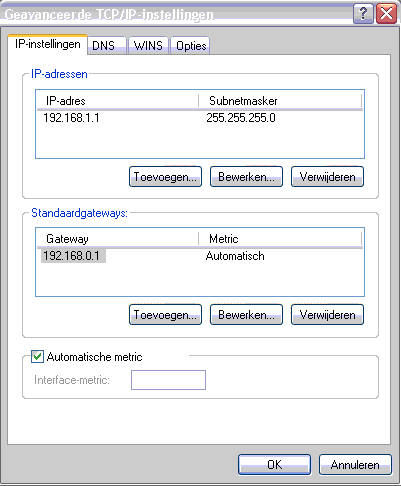
Het probleem is nu dus dat het totaal niet werkt. Ik kan niet eens een andere computer in t netwerk pingen. Alleen de loopback interface en het ip adres van de computer zelf zijn te pingen, maar dat lijkt me eigenlijk ook vrij logisch dat dit wel lukt. Maar nu is mijn vraag dus wat doe ik fout, want ik kom er echt niet aan uit.
Dit de situatie:
code:
1
2
3
4
5
6
7
8
9
10
11
12
13
14
15
16
17
18
19
20
21
22
23
24
25
26
27
28
29
30
31
32
33
34
35
36
37
38
39
40
41
42
43
44
45
46
47
48
49
50
51
52
| -----------------------
| |
| Internet |
| |
-----------------------
|
|
|
-----------------------
| |
| COM21 Modem |
| CableWanadoo |
| |
-----------------------
|
| eth0 3Com PCI 3C590 10Mbps IRQ 10 / ppp0 --- DHCP
|
-----------------------
| |
| Slackware |
| Router & |
| Firewall |
| |
-----------------------
|
| eth1 RealTek RTL8193C 10/100Mbps IRQ 11 --- IP 192.168.0.1
|
----------------------- -------------------------
| | | |
| 3Com SuperStack | | Nog te kopen | ---------------
| Dual Speed Hub |---| Wireless Accespoint |---| 192.168.3.1 |
| 500 3C16611 | | | ---------------
| | -------------------------
-----------------------
| | | | |
| | | | |
| | | | |
--------------- ---------------
| 192.168.1.1 | | 192.168.1.2 |
--------------- ---------------
| | |
| | |
| | |
--------------- ---------------
| 192.168.2.1 | | 192.168.2.2 |
--------------- ---------------
|
|
|
---------------
| 192.168.2.3 |
--------------- |
Zo moet het netwerk er dus uit komen te zien. Na het de Linux Networking HOWTO en de Linux IP Masquerade HOWTO te hebben doorlopen kwam ik uit op deze configuratie:
/etc/rc.d/rc.inet1.conf:
code:
1
2
3
4
5
6
7
8
9
10
11
| # config information for eth0: ipaddr[0]="" netmask[0]="" use_dhcp[0]="yes" dhcp_hostname[0]="" # config information for eth1: ipaddr[1]="192.168.0.1" netmask[1]="255.255.255.0" use_dhcp[1]="" dhcp_hostname[1]="" |
/etc/resolv.conf:
code:
1
2
| nameserver 195.96.96.97 nameserver 195.96.96.33 |
/etc/host.conf:
code:
1
2
| order hosts,bind multi on |
/etc/hosts:
code:
1
2
3
4
5
6
7
8
9
10
11
12
13
14
15
16
17
| # For loopbacking. 127.0.0.1 localhost loopback # For local network (LAN). 192.168.0.1 ares.pantheon.nl ares #router/firewall (this host) #pc's benedenverdieping 192.168.1.1 athena.pantheon.nl athena #pc 1 studeerkamer 192.168.1.2 aeolus.pantheon.nl aeolus #pc 2 studeerkamer #pc's bovenverdieping 192.168.2.1 atlas.pantheon.nl atlas #server slaapkamer bart 192.168.2.2 aphrodite.pantheon.nl aphrodite #pc slaapkamer bart 192.168.2.3 apollo.pantheon.nl apollo #mp3-speler slaapkamer bart #draadloze verbindingen (laptops) 192.168.3.1 artemis.pantheon.nl artemis #laptop bart |
/etc/rc.d/rc.local:
code:
1
2
| echo "Loading the rc.firewall ruleset..." /etc/rc.d/rc.firewall-iptables |
/etc/rc.d/rc.firewall-iptables:
code:
1
2
3
4
5
6
7
8
9
10
11
12
13
14
15
16
17
18
19
20
21
22
23
24
25
26
27
28
29
30
31
32
33
34
35
36
37
38
39
40
41
42
43
44
45
46
47
48
49
50
51
52
53
54
55
56
57
58
59
60
61
62
63
64
65
66
67
68
69
70
71
72
73
74
75
76
77
78
79
80
81
82
83
84
85
86
87
88
89
90
91
92
93
94
95
96
97
98
99
100
101
102
103
104
105
106
107
108
109
110
111
112
113
114
115
116
117
118
119
120
121
122
123
124
125
126
127
128
129
130
131
132
133
134
135
136
137
138
139
140
141
142
143
144
145
146
147
148
149
150
151
152
153
154
155
156
157
158
159
160
161
162
163
164
165
166
167
168
169
170
171
172
173
174
175
176
177
178
179
180
181
182
183
184
185
186
187
188
189
190
191
192
193
194
195
196
197
198
199
200
201
202
203
204
205
206
207
208
209
210
211
212
213
214
215
216
217
218
219
220
221
222
223
224
225
226
227
228
229
230
231
232
233
234
235
236
237
238
239
240
241
242
243
244
245
246
247
248
249
250
251
252
253
254
255
256
257
258
259
260
261
262
263
264
265
266
267
268
269
| #!/bin/sh echo -e "\n\nLoading simple rc.firewall version $FWVER..\n" # The location of the iptables and kernel module programs # # If your Linux distribution came with a copy of iptables, # most likely all the programs will be located in /sbin. If # you manually compiled iptables, the default location will # be in /usr/local/sbin # # ** Please use the "whereis iptables" command to figure out # ** where your copy is and change the path below to reflect # ** your setup # #IPTABLES=/sbin/iptables IPTABLES=/usr/sbin/iptables DEPMOD=/sbin/depmod MODPROBE=/sbin/modprobe #Setting the EXTERNAL and INTERNAL interfaces for the network # # Each IP Masquerade network needs to have at least one # external and one internal network. The external network # is where the natting will occur and the internal network # should preferably be addressed with a RFC1918 private address # scheme. # # For this example, "eth0" is external and "eth1" is internal" # # # NOTE: If this doesnt EXACTLY fit your configuration, you must # change the EXTIF or INTIF variables above. For example: # # If you are a PPPoE or analog modem user: # # EXTIF="ppp0" # # EXTIF="ppp0" INTIF="eth1" echo " External Interface: $EXTIF" echo " Internal Interface: $INTIF" #====================================================================== #== No editing beyond this line is required for initial MASQ testing == echo -en " loading modules: " # Need to verify that all modules have all required dependencies # echo " - Verifying that all kernel modules are ok" $DEPMOD -a # With the new IPTABLES code, the core MASQ functionality is now either # modular or compiled into the kernel. This HOWTO shows ALL IPTABLES # options as MODULES. If your kernel is compiled correctly, there is # NO need to load the kernel modules manually. # # NOTE: The following items are listed ONLY for informational reasons. # There is no reason to manual load these modules unless your # kernel is either mis-configured or you intentionally disabled # the kernel module autoloader. # # Upon the commands of starting up IP Masq on the server, the # following kernel modules will be automatically loaded: # # NOTE: Only load the IP MASQ modules you need. All current IP MASQ # modules are shown below but are commented out from loading. # =============================================================== echo "----------------------------------------------------------------------" #Load the main body of the IPTABLES module - "iptable" # - Loaded automatically when the "iptables" command is invoked # # - Loaded manually to clean up kernel auto-loading timing issues # echo -en "ip_tables, " $MODPROBE ip_tables #Load the IPTABLES filtering module - "iptable_filter" # - Loaded automatically when filter policies are activated #Load the stateful connection tracking framework - "ip_conntrack" # # The conntrack module in itself does nothing without other specific # conntrack modules being loaded afterwards such as the "ip_conntrack_ftp" # module # # - This module is loaded automatically when MASQ functionality is # enabled # # - Loaded manually to clean up kernel auto-loading timing issues # echo -en "ip_conntrack, " $MODPROBE ip_conntrack #Load the FTP tracking mechanism for full FTP tracking # # Enabled by default -- insert a "#" on the next line to deactivate # echo -en "ip_conntrack_ftp, " $MODPROBE ip_conntrack_ftp #Load the IRC tracking mechanism for full IRC tracking # # Enabled by default -- insert a "#" on the next line to deactivate # echo -en "ip_conntrack_irc, " $MODPROBE ip_conntrack_irc #Load the general IPTABLES NAT code - "iptable_nat" # - Loaded automatically when MASQ functionality is turned on # # - Loaded manually to clean up kernel auto-loading timing issues # echo -en "iptable_nat, " $MODPROBE iptable_nat #Loads the FTP NAT functionality into the core IPTABLES code # Required to support non-PASV FTP. # # Enabled by default -- insert a "#" on the next line to deactivate # echo -en "ip_nat_ftp, " $MODPROBE ip_nat_ftp #Loads the IRC NAT functionality into the core IPTABLES code # Required to support NAT of IRC DCC requests # # Disabled by default -- remove the "#" on the next line to activate # #echo -e "ip_nat_irc" #$MODPROBE ip_nat_irc echo "----------------------------------------------------------------------" # Just to be complete, here is a partial list of some of the other # IPTABLES kernel modules and their function. Please note that most # of these modules (the ipt ones) are automatically loaded by the # master kernel module for proper operation and don't need to be # manually loaded. # -------------------------------------------------------------------- # # ip_nat_snmp_basic - this module allows for proper NATing of some # SNMP traffic # # iptable_mangle - this target allows for packets to be # manipulated for things like the TCPMSS # option, etc. # # -- # # ipt_mark - this target marks a given packet for future action. # This automatically loads the ipt_MARK module # # ipt_tcpmss - this target allows to manipulate the TCP MSS # option for braindead remote firewalls. # This automatically loads the ipt_TCPMSS module # # ipt_limit - this target allows for packets to be limited to # to many hits per sec/min/hr # # ipt_multiport - this match allows for targets within a range # of port numbers vs. listing each port individually # # ipt_state - this match allows to catch packets with various # IP and TCP flags set/unset # # ipt_unclean - this match allows to catch packets that have invalid # IP/TCP flags set # # iptable_filter - this module allows for packets to be DROPped, # REJECTed, or LOGged. This module automatically # loads the following modules: # # ipt_LOG - this target allows for packets to be # logged # # ipt_REJECT - this target DROPs the packet and returns # a configurable ICMP packet back to the # sender. # echo -e " Done loading modules.\n" #CRITICAL: Enable IP forwarding since it is disabled by default since # # Redhat Users: you may try changing the options in # /etc/sysconfig/network from: # # FORWARD_IPV4=false # to # FORWARD_IPV4=true # echo " Enabling forwarding.." echo "1" > /proc/sys/net/ipv4/ip_forward # Dynamic IP users: # # If you get your IP address dynamically from SLIP, PPP, or DHCP, # enable this following option. This enables dynamic-address hacking # which makes the life with Diald and similar programs much easier. # echo " Enabling DynamicAddr.." echo "1" > /proc/sys/net/ipv4/ip_dynaddr # Enable simple IP forwarding and Masquerading # # NOTE: In IPTABLES speak, IP Masquerading is a form of SourceNAT or SNAT. # # NOTE #2: The following is an example for an internal LAN address in the # 192.168.0.x network with a 255.255.255.0 or a "24" bit subnet mask # connecting to the Internet on external interface "ppp0". This # example will MASQ internal traffic out to the Internet but not # allow non-initiated traffic into your internal network. # # # ** Please change the above network numbers, subnet mask, and your # *** Internet connection interface name to match your setup # #Clearing any previous configuration # # Unless specified, the defaults for INPUT and OUTPUT is ACCEPT # The default for FORWARD is DROP (REJECT is not a valid policy) # # Isn't ACCEPT insecure? To some degree, YES, but this is our testing # phase. Once we know that IPMASQ is working well, I recommend you run # the rc.firewall-*-stronger rulesets which set the defaults to DROP but # also include the critical additional rulesets to still let you connect to # the IPMASQ server, etc. # echo " Clearing any existing rules and setting default policy.." $IPTABLES -P INPUT ACCEPT $IPTABLES -F INPUT $IPTABLES -P OUTPUT ACCEPT $IPTABLES -F OUTPUT $IPTABLES -P FORWARD DROP $IPTABLES -F FORWARD $IPTABLES -t nat -F echo " FWD: Allow all connections OUT and only existing and related ones IN" $IPTABLES -A FORWARD -i $EXTIF -o $INTIF -m state --state ESTABLISHED,RELATED -j ACCEPT $IPTABLES -A FORWARD -i $INTIF -o $EXTIF -j ACCEPT $IPTABLES -A FORWARD -j LOG echo " Enabling SNAT (MASQUERADE) functionality on $EXTIF" $IPTABLES -t nat -A POSTROUTING -o $EXTIF -j MASQUERADE echo -e "\nDone.\n" |
Voor de verbinding tussen mijn modem en de router/firewall gebruik ik The Roaring Pengiun PPPoE software.
Het probleem is nu dus dat het totaal niet werkt. Ik kan niet eens een andere computer in t netwerk pingen. Alleen de loopback interface en het ip adres van de computer zelf zijn te pingen, maar dat lijkt me eigenlijk ook vrij logisch dat dit wel lukt. Maar nu is mijn vraag dus wat doe ik fout, want ik kom er echt niet aan uit.
[ Voor 4% gewijzigd door BigBart op 27-06-2005 11:13 ]
Velen die leven verdienen de dood en sommigen die sterven verdienen het leven.
:strip_icc():strip_exif()/u/22092/crop5fa8360e95568_cropped.jpeg?f=community)
 Laten we maar wachten totdat de TS uitsluitsel kan geven.